
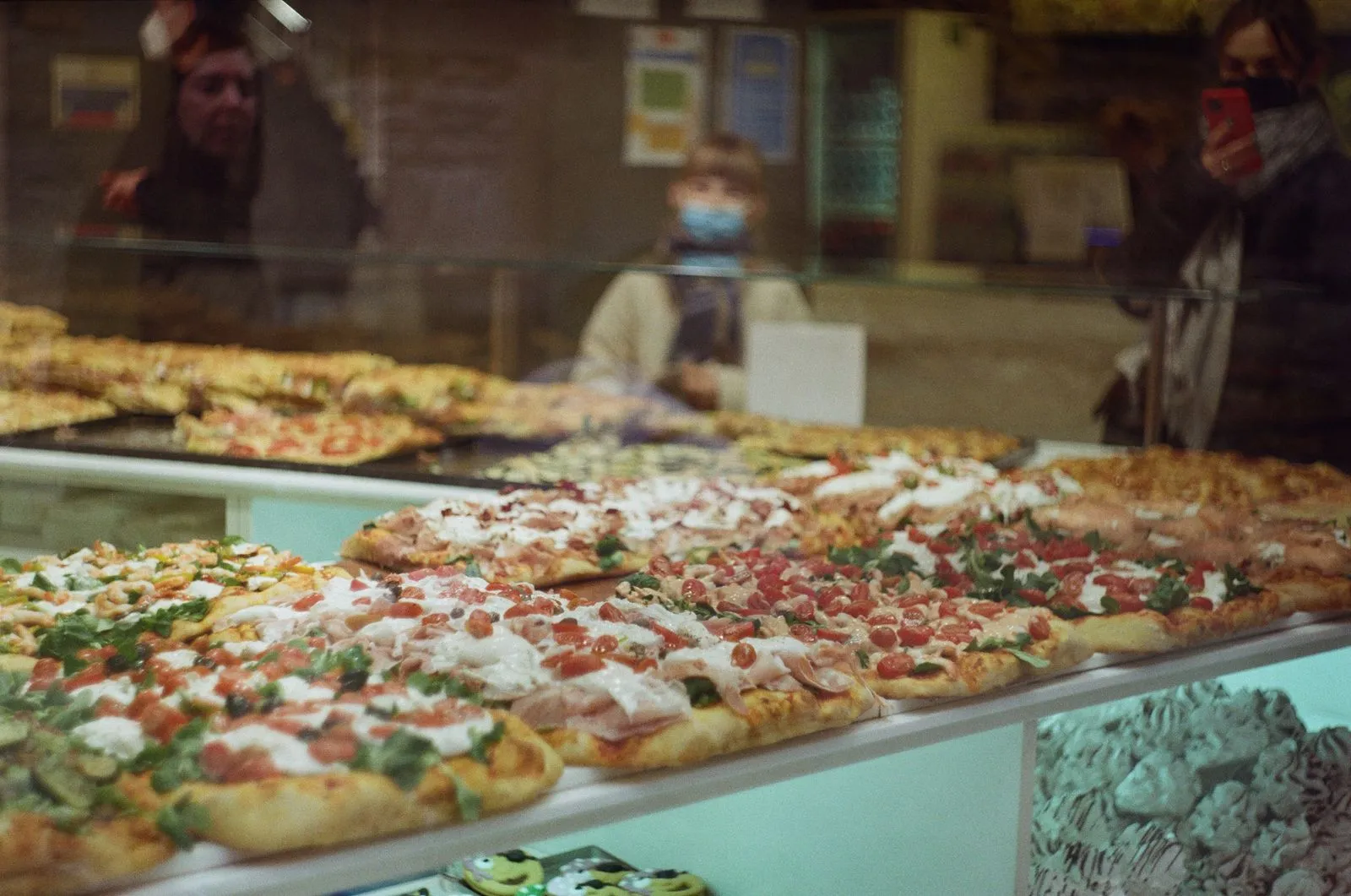
Cold pizza can be satisfying, but a limp crust and rubbery cheese are easy to avoid. The key is to warm the slice gently while giving the bottom direct, dry heat. A skillet works well for one or two slices, while an oven or toaster oven suits a larger batch. Start with pizza stored safely in the refrigerator, then choose the method that matches your time and equipment.
Use a Skillet for One or Two Slices
Set a nonstick or cast-iron skillet over medium-low heat and place the cold slice in it. Let the bottom warm for a few minutes, checking that it browns without scorching. Keep the pan uncovered at first so steam does not collect beneath the crust. If the slice is thick, lower the heat and give it more time rather than turning the burner up.
When the crust feels crisp, add a few drops of water to an empty spot in the pan, away from the pizza. Cover the skillet briefly to let the steam soften and warm the cheese. Keep the lid from touching the slice, and remove it as soon as the cheese looks melted. Too much water or too much covered time can make the crust soft.
Warm Several Slices in the Oven
Heat the oven to 375°F. Place slices on a preheated baking sheet or directly on the oven rack, leaving space between them so hot air can circulate. A sheet makes it easier to handle the pizza; a rack can help heat the underside evenly. Avoid piling slices on top of one another, which traps moisture and slows reheating.
Warm the slices until the cheese is hot and the crust has regained some firmness, checking after several minutes. Timing depends on slice thickness, toppings, and your oven, so use the pizza’s appearance and temperature as your guide. For a softer top, loosely cover the slices with foil at the start, then uncover them near the end to let the crust dry and crisp.
Choose a Toaster Oven for Small Batches
A toaster oven offers a convenient middle ground when you want more even heating than a skillet but do not need to heat a full-size oven. Preheat it to about 375°F, place slices on the rack or a small tray, and warm them until the cheese is hot. Keep the pizza clear of the heating elements, especially when toppings or cheese sit close to the edge.
Check early because compact ovens can heat unevenly and brown pizza quickly. If the top warms before the base crisps, move the tray to a lower rack or reduce the heat slightly. Let the slice rest briefly before eating so the cheese settles and the bottom stays firm.
Avoid Common Reheating Mistakes
The microwave heats quickly, but it tends to soften the crust because it warms moisture throughout the slice. If you use one, heat the pizza only until warm, then finish it in a dry skillet to crisp the base. Avoid reheating at high power for a long stretch; the cheese can turn tough while the crust remains chewy.
Do not reheat pizza while it is still in a box, and skip adding oil unless the pan is sticking. Oil can make the bottom greasy instead of crisp. Refrigerate leftovers promptly in a covered container, and discard pizza that has been left at room temperature for too long. Reheat only the slices you plan to eat.
For the crispiest leftovers, use a skillet for a quick single serving or an oven for several slices. Keep the heat moderate, avoid trapping steam for too long, and check the pizza as it warms. If you are in Scottsdale, stop by Scottsdale Taglio for a fresh slice when reheating is not on the menu.